Wednesday, June 2, 2021

Warehousing / Cold Storage?

We've sold quite a number of TransFueler to operators of warehouses & cold storage facilities.  This allows them to keep their operations running 24/7, during power outages.  

A good example, are the food warehouses run by Trader Joe's.  We built 14 custom refuelers for them, one for each warehouse facility.  These 1,000 gallon diesel TransFuelers will keep their back up generators running for days.


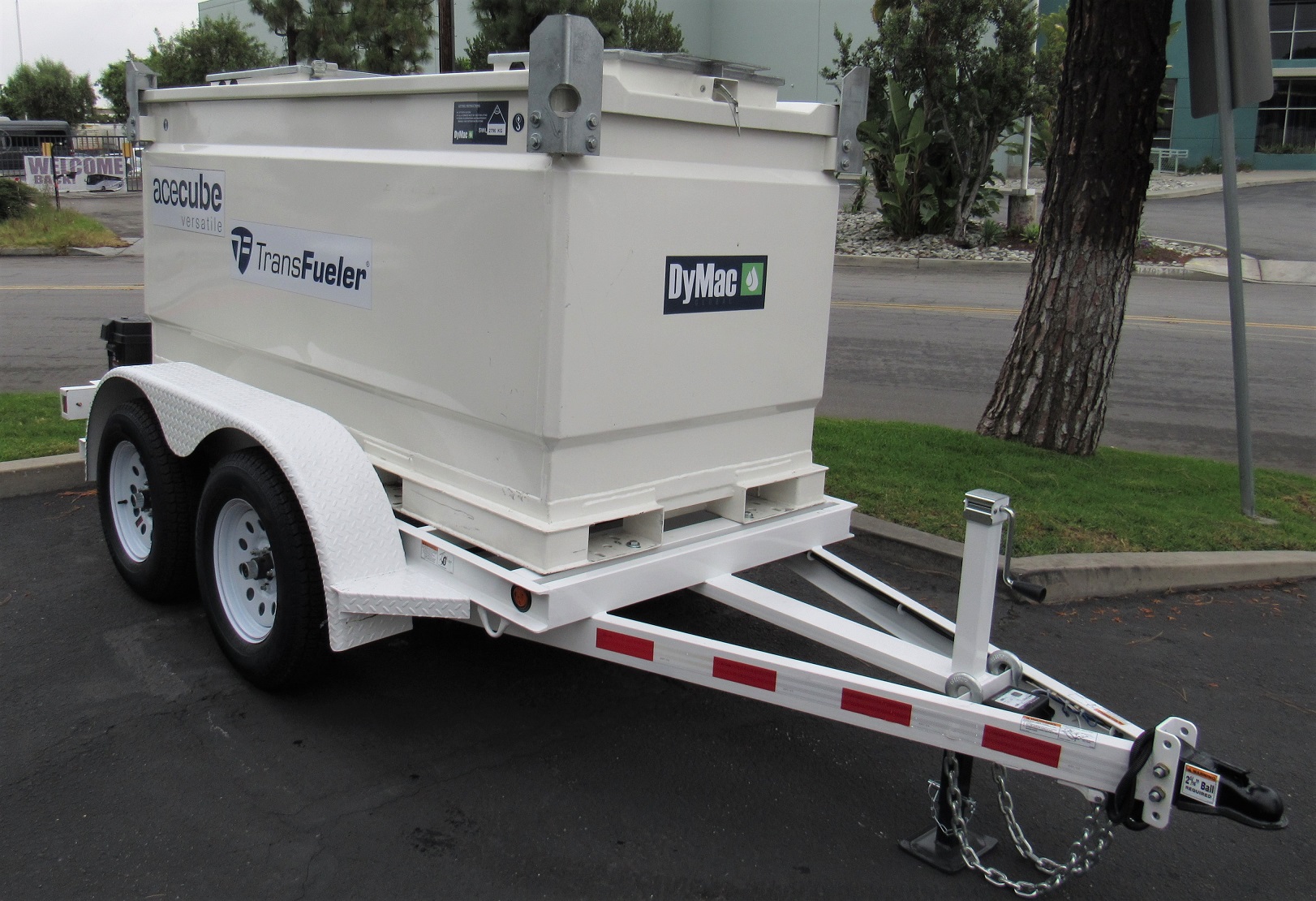
Another is one we just delivered to a beverage distributor in Arizona. The versatile ACV-TransFueler 500. This refueler combines our DyMac ACV tank, with a bespoke TransFueler trailer and dispensing system.  


If you're in the business of keeping things in a climate controlled building, or simply need power available 24/7/365, you need a TransFueler. 

Refueling standby generators with five gallon cans is a thing of the past. Improve safety, efficiency and the ever important environmental aspect with a TransFueler.

Tuesday, March 2, 2021

Emergency Preparedness

Texas Ice Storms

Southeast Hurricanes

Western Wildfires

Northeast Blizzards

Midwest Tornadoes

Southern Flooding

Every year, we expect the unexpected. Being prepared for these events is vital to protecting your communities, businesses, and loved ones. The current snow & ice storms in Texas & Mid-South clearly show the havoc created by not adequately planning for power outages. Whether it's Hurricanes in Florida, flooding in the south, or snow storms in the north, all emergency situations require preparedness. 

Quality Fuel Trailer and Tank Inc. has the solution.  With the industry's largest selection, we have the right refueler for your application. 

In this blog post, I'm going to go through a couple different scenarios where proper emergency fuel preparedness can be the difference between life and death.

- Hurricanes, Flooding & Blizzards:  Year round, somewhere in the country is having or recovering from a weather caused disaster.  Be it freezing temperatures & blizzards, forest & range wildfires, hurricanes & tornadoes, or flooding.  Frequently, these events cause power outages along with significant physical damage.  

Power outages carry serious consequences: health and safety is compromised, communications are cut off, basic life supporting needs such as heat, power, water and food are all at risk.  Medical facilities become overwhelmed. Law enforcement agencies are stressed. The most efficient solution is having a fuel reserve available.  

- Forest, Brush & Wildfires:  Along with power outages these fires cause, simply fighting the fires is energy intensive. Aerial firefighting is standard procedure these days for significant wildfires.  Whether by airplane or helicopter, these operations consume a good amount of jet fuel, as well as diesel for ground vehicles and heavy equipment.  Having a dedicated mobile, onsite supply of fuel can mean the difference between successfully beating down a fire, or continued destruction. 

The Solution:

TransFueler ERT    Emergency Response Trailer

Super-Duty Steel Trailer equipped with what you need:

  • Dual fuel tanks: Diesel & Gasoline
  • Dual dispensing systems. Choices of 12V (Standard), diesel or gas powered pumps.
  • Dual deep cycle batteries with automatic chargers.
  • Large, locking cabinet enclosure. Securely covers all dispensing equipment, and provides ample storage space for tools, spill kits, first aid supplies, etc.
  • High Intensity 12V work lights on adjustable height mounting poles.
  • Two fire extinguishers.
  • Spare tire, mounted.
  • Emergency shut-off switch.

Popular Options

  • Generator
  • Air Compressor
  • DEF tank & pump
  • Tank heaters 
  • Tool boxes
  • Defueling transfer system. Pump fuel from a stationary or underground tank for mobile use.


Call Now To Get More Information On The TransFueler Emergency Response Trailers

800-509-1904

Tuesday, June 16, 2020

DyMac Global News

We are very proud to announce that Quality Fuel Trailer and Tank Inc. has been appointed to be the master distributor of DyMac Global tanks in the western U.S.

DyMac Global is an international tank manufacturer, based in the UK.  Their fuel storage tanks are built to UN31A/Y standards, as well as UL142 listed. They are certified to transport diesel, gas, and jet fuels.  These robust tanks are now in use worldwide. 


As master distributors, we are in the process of creating a dealer network throughout the United States. If your company is involved with the sales of heavy equipment, generators, vehicles or similar, we invite you to contact us to discuss dealership opportunities. 

Available sizes
  • 119 Gallons / 450 Liters 
  • 250 Gallons / 950 Liters 
  • 528 Gallons / 2000 Liters 
  • 792 Gallons / 3000 Liters 
  • 1188 Gallons / 4500 Liters 
  • 1664 Gallons / 6300 Liters 
  • 2641 Gallons / 10000 Liters 
Features
  • Baffled Inner Tank  
  • Bi-Directional Forklift Pockets 
  • Unique Hexagonal Galvanized Steel Corners / Lifting Points
  • 110% Containment. Meets Global Environmental Regulations 
  • Completely Removable Inner Tank for Easy Cleaning & Inspection 
  • Two locking hatches, for Multiple Uses & Versatility  
  • Three “Letter Box” Type Openings for Secure Hose Connections

Standard Equipment
  • 3” Fusible Fill Cap 
  • Pressure / Vacuum Vent 
  • Breather (Atmospheric) Vent 
  • Three Feed Ports with Drop Tubes 
  • Three Return Ports 
  • Fuel Level Gauge 

Approvals & Certifications
  • UL 142  
  • ULC S-601 
  • UN31 A/Y 
  • CAN CG343, 146, 2002 
  • DOT Canada 
  • DOT USA

Monday, October 21, 2019

Cost/Benefit Analysis: TransFueler Aviation

We've always known that a TransFueler will save money quite effectively for aircraft operators.
Now, we have actual financial analysis results to share.

This study was done by a good customer, one of the largest helicopter operators in the world. They operate about 400 jet helicopters in a variety of roles, primarily air ambulance and tourism.

The subject aircraft is an Airbus Eurocopter EC135.  This is a medium to large, twin turbine engine helicopter, used worldwide. Quite typical of air ambulance, law enforcement, tourism, etc. uses. In this scenario, the helicopter is based at a hospital or airport without access to fueling 24/7.

The study used data collected over a one year period of time. Bottom line: they discovered that a TransFueler saved almost $74,000/year.

Breaking it down:
  • Annual flights: 285 (Approximately 560 flight hours)
  • Flights needing extra stop to refuel: 199 
  • Percentage of flights needing to stop to refuel: 70%
  • Actual extra flight time for fuel stop: 21 minutes per trip
  • Direct operating cost per flight hour (Excluding fuel): $759.11
  • Actual operating savings: $50,284

  • Aircraft hours reduced: 66
  • Aircraft fuel consumption, gallons per hour: 68
  • Average fuel cost per gallon: $4.12
  • Fuel cost savings: $18,565

  •  Annual flight hours: 559
  •  Hours reduced by not stopping for fuel: 66
  • Aircraft fuel consumption rate: 68 gallons per hour
  • Annual fuel use: 33490 gallons
  • Savings per gallon: $0.15 (Agreement with local fuel supplier)
  • Fuel savings: $5,024
Total Savings: $73,873
Typical cost of a TransFueler Aviation refueler, 750 gallon capacity: $28,000.
Time to completely recoup cost of purchasing TransFueler: 4.5 MONTHS

This isn't a made-up marketing story. These are real numbers, from a real aircraft operator.
If you are interested in achieving similar results. Real, genuine savings. Get in touch.

Wednesday, October 9, 2019

Top 7 Ways a TransFueler Will Save You Money

1. Reduce down time spent going to a gas station or filling with 5 gallon cans.  Fuel your vehicles, equipment & generators 24/7, on your schedule.

2. Reduce down time waiting for a fuel truck to deliver & refuel your equipment. How many hours are wasted with an out-of-fuel piece of equipment that could be working instead of waiting? How many labor hours are lost? 

3. Reduce fuel costs with a fuel contract. Fuel suppliers typically have programs to sell you fuel at reduced cost when you agree to have them be your regular supplier.

4. Reduce per trip delivery charges by fuel suppliers. Have them come fill your TransFueler with a large load, and fill your equipment from the TransFueler. Typical delivery fees run about $50/per trip. This alone can pay for a TransFueler in a matter of months.

5. Be prepared for fuel shortages, natural disasters, etc. When others tanks are dry, have a good supply of fuel on hand to keep working.

6. Reduce "cycle" costs. Particularly applicable to our aviation customers. Instead of flying to an airport to refuel your helicopter or plane, fuel it on your site, 24/7. Reduces engine cycles & crew costs.  100% readiness.

7. Reduce fuel theft. Instead of employees going to gas stations with a company credit card, dispense and track fuel usage 24/7 with a properly equipped TransFueler.

Summary:
A TransFueler (or any other of our excellent refuelers) will save you money.
  • Reduce down time for both equipment & personnel. 
  • Keep equipment working instead of waiting.
  • Purchase fuel cheaper in bulk. 
  • Reduce engine cycles by fueling on site. 
  • Be prepared by having a safe, secure 24/7 refueling capability.


Friday, June 28, 2019

John Deere R&D

Here's a neat TransFueler we built for John Deere. They will be using it at their research & development center to fuel new and in-development equipment.

TransFueler with Enclosure Cabinet

This unit is a 750 gallon diesel refueler, with our steel enclosure cabinet to house the dispensing system.

       
   TransFueler TF-750         
The custom designed dispensing system includes a Gorman-Rupp gas powered pump & double fuel filters.


Double Filtration


Gorman-Rupp Gas Powered Pump

Thursday, June 27, 2019

Custom TransFuelers for Lockheed Martin

We recently delivered three of these great custom built TransFuelers to Lockheed Martin. They will be used in their new aircraft production facility.

TransFueler 300 Double-Wall Stainless Steel


These refuelers are 300 gallons each, with the tank constructed of double wall stainless steel, then powder coated. Single axle design, built for on-site use at their facilities.

TransFueler 300 Custom


TransFueler 300 Double-Wall

Thursday, June 13, 2019

Very cool TransFueler Aviation refueler custom built for a major aerospace company.

TransFueler Aviation Jet Refueler


This will be used for flight testing of UAV's: Unmanned Air Vehicles. AKA: Drones...
 
Custom designed for this unique application, this TransFueler features a stainless steel tank on removable platform. This allows for it to be removed from the trailer chassis and used as a stand-alone refueler.
Also features double fuel filtration to insure the purest quality fuel for testing the aircraft:

Double Facet VF Series Jet Fuel Filters


They may not need a pilot in the cockpit, but they all need fuel in the tanks!

Thursday, June 6, 2019

Welcome to America!

Quality Fuel Trailer and Tank was founded on the premise of offering our customers the largest selection of choices in the small-medium fueling industry.

Our competitors offer one or two choices, we offer over a dozen excellent choices. 


Why? We all have different needs & situations. While the competition forces you to adapt to their limited offerings, we almost always have the right fit for your specific needs. If we don't have the refueling system you need, we won't try to sell you one that's not the best fit.

And now, we add to our selection; the DyMac lines of fuel tanks.  DyMac is a British company in the business of high quality fuel storage & transport tanks.  We welcome them to the QFT&T family of superior products.  DyMac primarily manufactures steel & stainless steel tanks for diesel, gas & jet fuels. These tanks are legal for all of these fuels, virtually anywhere in the world.

AceCube Versatile

We're now offering the AceCube Versatile series (ACV) and the FuelTainer Versatile series. 
These tanks are all UL rated, and the AceCube Versatile series is also UN31A/Y rated. This allows for storage & transport of gas, jet fuels & diesel virtually anywhere.

ACV tanks are available in sizes from 119 gallons up to 2600 gallons, movable whether full or empty.  
AceCube Versatile on Trailer
 
FuelTainer tanks are available from 3100 gallons, up to 18,000+ gallons. FuelTainer tanks are intended to be on-site fueling stations, easily moved to different locations when empty.  All dispensing equipment is safe & secure in the standard locking area.

FuelTainer FTV-30900L

Our unique relationship with DyMac allows for us to outfit these very versatile tanks with a wide variety of QFT&T TransFueler features.

Available choices:
  • Custom engineered trailer. Designed and built by us. Engineered to tow well whether full or empty.  Fully DOT legal in all states. 
  • Dispensing systems. Our wide variety of pumps, meters, hoses, fuel management systems. Top brands: GPI, Hannay, Fill-Rite, Dixon Pump, Piusi, Reelcraft, etc... Everything needed for your application.
  • TransFueler Aviation system. Our exclusive & patent-pending aviation dispensing system. Fully integrated to fuel jet or piston aircraft anytime, anywhere. In use worldwide...
  • Custom Options. With the widest selection of additional options, the choices are virtually unlimited. We can configure your ACV or FuelTainer exactly how you need it. 
No compromise. No settling for less. Contact us now to discuss the BEST fit for you.

800-509-1904
info@qualityfueltrailers.com

Wednesday, June 5, 2019

Aviation Refuelers: Tanks

We build about half of our TransFuelers as mobile aviation refuelers. Over the years, we've continuously improved our products to remain the industry leader.

Among the most important aspects of these units, is of course the tank itself.
As the core component, there are many decisions to be made when buying a refueling tank.

Tank Types:

Non-Code tanks are designed to safely hold and carry fuels on smaller airports and private property. They are relatively basic, similar to a diesel tank. No roll-over protection. No internal safety shut-off valve, etc.  Typically used for jet fuels, they are also used for AvGas in limited situations. The least expensive & simplest to maintain.

Non-code tanks can be either single-wall or double-wall, and made of steel or stainless steel. We strongly recommend stainless steel as mild (carbon) steel is subject to corrosion inside the tank. An epoxy lining can reduce corrosion, but has not been proven to hold up long term.

Corry-Lawrence Airport, Pennsylvania


UN31A/Y/ tanks are engineered to be robust & stout. An excellent choice for all aviation fuels, these tanks are legal for both AvGas & jet fuels, virtually anywhere in the world. UN31 tanks are not just "double-wall", they are fundamentally a tank within a tank. The inner tank is removable for cleaning, and they have a large opening hatch to inspect the inside of the tank as well. In most cases, these tanks are designed with an enclosed area to hold dispensing equipment, keeping it all safe & secure.

Our ACV series UN31 tanks are also available with a stainless steel inner tank.  Virtually corrosion free, this further insures clean, pure fuel.  Combined with our exclusive & patent-pending aviation dispensing system, these make an ideal aviation refueler. These tanks cost between a Non-Code tank, and a DOT 406 tank.

AceCube Versatile


DOT 406 tanks are very similar to the large tanker trucks you see on the highway. Built to basically the same specifications, these are also safe & legal to transport and store all aviation fuels. Available is steel or stainless steel (and in some cases aluminum) single-wall is typical for DOT406 tanks.

We can provide DOT 406 tanks, on a limited basis because these tanks are rather expensive, and have a long lead time.  As with all refuelers, DOT 406 tanks are available with our aviation dispensing system, and with or without a TransFueler chassis.


City of Fontana Police Aero Division

How do you choose the right tank for your TransFueler?

This depends on several factors, including but certainly not limited to:
  • Type of fuel used.
  • Size and classification of airport.
  • Budget.
  • On site or transport use.
  • Laws, rules & regulations specific to your location.
Our objective is to offer a variety of solutions, and help guide you to the best system for your needs.   Please feel free to contact our team to discuss your particular needs.

We promise not to "sell" you anything. We do promise to advise you of the best fit for your specific application.

Friday, March 22, 2019

Jet Fuel Guidelines


One of the most critical aspects of operating an aviation fleet is to ensure that all aspects of your fueling operations are compliant with applicable industry and regulatory safety standards.

Two important references for aviation fueling professionals are NFPA 407 "Standard for Aircraft Fuel Servicing" and ATA Specification No.103. NFPA 407 is published by the National Fire Protection Association of Quincy, MA while A T A 103 is published by the Air Transport Association of America in Washington, D.C.

Here is a partial checklist of safety issues outlined in NFPA 407 and ATA 103 relating specifically to Jet Fuel handling that you should consider in evaluating the safety of your organization's fueling procedures.


Jet Fuel Receipt
The receiving storage tank should always be gauged prior to delivery to verify that there is sufficient room to accept the new fuel delivery.
Always connect a grounding cable to the delivery truck to prevent a difference in electrostatic potential.
After allowing the delivery truck to set for a minimum of ten minutes, conduct a "Clear and Bright Test" on each compartment to check for visible contaminants.
An API Gravity Test (conducted with an ASTM hydrometer similar to the ones used to check your automotive battery) should next be conducted on incoming Jet Fuel. API Gravity must be from 37 through 51 degrees, corrected to 60 degrees F. The API Gravity read on your hydrometer should match the reading recorded on the fuel delivery manifest (there should not be even 1 degree of variance).
All Jet Fuel should be filtered into storage upon receipt.
A minimum of thirty minutes for settling should be allowed before gauging and recording tank volume.  The receiving tank should be allowed to settle as long as possible before dispensing fuel from it. Settling time of one hour per foot of product delivered is desirable.
The sumps of all receiving tanks and filter should be drained after fuel receipt and a White Bucket test performed.
Under no circumstances is it acceptable to receive and dispense from the same tank simultaneously.


Jet Fuel Storage
Jet Fuel should only be stored in stainless steel, aluminum or steel tanks (which have an epoxy lining suitable specifically for Jet Fuel service).
Jet Fuel Storage Tanks should be equipped with a sump drain to remove accumulated water. A manual water drain valve (with frost protection) should also be provided on above-ground storage tanks. 
Jet Fuel Storage Tanks should be equipped with proper venting, both normal & emergency.
Jet Fuel should be recirculated through filtration on a regular (weekly) basis to maintain product quality. Fuel samples should be taken while the system is pressurized (flowing) to determine quality of stored product.
Proper signage is required for all Jet Fuel Storage Tanks & piping. Jet Fuel identification decals employ white letters on a black background. Pipe banding of Jet Fuel pipelines employs a single black band
Flammable, No Smoking, Emergency Shut-Off and other safety signage is to be provided in addition to product identification.


Jet Fuel Dispensing
Cast iron, copper and galvanized steel piping, valves and fittings are not permitted for use with aviation fuels. Ductile iron valves are permitted.
Jet Fuel Filter/Separators should meet API 1581, Group II, Class B, Third Edition performance criteria and be minimally equipped with an air eliminator with check valve, pressure relief valve, piston-type differential pressure gauge, and manual water drain valve. Date of the last filter change should always be marked on the vessel. In cold weather climates, an explosion-proof, thermostatically-controlled heater is recommended for installation in the filter sump housing.
Filter/Separators should be used to prevent the introduction of water contaminated fuel into the aircraft.

 
Aircraft fueling facilities must be designed and equipped with Emergency Fuel Shutoff Stations capable of shutting off fuel flow to all dispensing outlets.
All fuel dispensing systems should be equipped with a Deadman Control. For overwing refueling, this control is built into the manual overwing nozzle. For underwing (or single point) refueling, deadman control typically consists of a control valve with a hand-held electric or hydraulic deadman handle (switch) deployed via a cable or hose reel assembly.
Static Protection in the form of static cable reels should be employed to bond aircraft to refueling vehicles, carts or cabinets to prevent a difference in their electrostatic potential.
All refueling hoses should comply with API Bulletin 1529 and should each be serial numbered and furnished with certified test data.
Bottom Loading Nozzles should be equipped with a minimum 60 mesh strainer screen.
During fueling operations, fire extinguishers should be available on all aircraft servicing ramps and aprons. Each refueler trailer should be equipped with a minimum of two (2) 20-B:C Fire Extinguishers; one on each side of the vehicle. 


Tuesday, January 22, 2019

Best Practices: Mobile Fueling

Mobile refueling is an increasingly popular choice.  Saves significant time & money for virtually all users. 

In the past, small equipment was fueled by those familiar five gallon containers. Large equipment was fueled by "wet hoser" trucks, which pulled up to each piece of equipment individually to fill their tanks. 

Current "Best Practice" eliminates those messy five gallon cans, and most of the wet hoser fuel truck deliveries.  

Five gallon cans: 
  • Small. Obviously, a 500 gallon TransFueler beats a 5 gallon can. By a factor of 100...
  • Inefficient: Multiple leaky little containers to deal with.
  • Expensive: Buying small amounts of fuel at "street" prices.
  • Frequent spills: Who hasn't experienced this?
  • Dangerous: Fuel spillage, skin contamination. Fire & health hazardous.
  • Awkward to handle. And you have that fuel smell on you and in your vehicle all day.
Wet Hoser Fuel Truck:
  • Inconvenient: Must pre-schedule fuel. Equipment sits idle waiting for fuel.
  • Expensive: Every time the truck delivers on-site incurs a trip charge.
  • More Expensive: Still not buying enough fuel to get the best bulk discounts.

TransFueler:
  • Holds plenty of fuel to keep vehicles, equipment, generators or aircraft running.
  • Vastly more efficient. Refuel 24/7, anywhere you need to.
  • Much safer. Very low spill rate. Very low body contact with fuel.
  • Easy to dispense fuel: Simple dispensing system keeps it easy to use.
  • Less Expensive: Equipment keeps working until it needs refueling. 
  • Less Expensive: Equipment operator keeps working until equipment needs refueling.
  • Less Expensive: Buy larger quantities of fuel to get a lower price. 
  • Less Expensive: Reduce trip charges by needing fewer fuel truck deliveries. 
 Looking at this, yes, it does look like an overt sales pitch. Reality is, each point is true. A TransFueler really does increase productivity & convenience, as well as save money. That results in a very real "Best Practice".

Why: Mobile Fueling

Mobile fueling is a quickly growing practice.  Think of the vehicles, equipment & aircraft that need to be refueled.  TransFueler mobile refuelers allow for simple & convenient refueling, where you need it, 24/7.

We'll outline three scenarios that benefit from TransFueler mobile refuelers. In this post, I will present the case of emergency medical / life flight type of helicopter operators. 


Helicopter Operator 

Our customer is America's largest operator of helicopters. Their primary business is providing emergency air ambulance / medical evacuation flights, and also operate tourism flights, and other commercial helicopter services in several locations. 

The company currently operates about 450 helicopters, from 300 bases, and employs around 5,000 people. Every year, they will provide over 100,000 medical emergency flights.  

Imagine the logistics of that... Nearly every flight is unscheduled; on demand. Crews and helicopters departing and returning constantly, around the clock. As soon as a helicopter returns to it's base, it is prepared for its next mission. Restocked with medical supplies, mechanically checked over, and refueled. 

Many of these helicopters are located at bases where there is not 24 hour fuel service. Others are based at hospitals, with no fuel service at all. Starting up and flying the helicopters to another airport just to refuel, is very, very costly & inefficient. 

Having a TransFueler on site, whether it's at the Mayo Clinic in Rochester MN, or a small airport in Nebraska means these life-saving helicopters can be refueled immediately upon returning form a mission.  Back in service, ready to go, 24/7...

The cost of a TransFueler Aviation refueler is minuscule compared to the saving of both money & time. To get an idea of the costs & savings involved, consider that it costs around $300 simply to start up and fly 15 minutes to another location to refuel. Then another $300 to start up and fly back to base.  (Rough figures, based on typical turbine helicopters commonly used)  Multiply that $600 by the number of times needed, and it adds up VERY quickly. Add in the fact that the aircraft & crew are not in service, or available to respond to a call during that hour it takes to accomplish the refueling trip. That's lost time that may dearly cost a patient awaiting transport.

Financially, TransFuelers are paid for very rapidly in these cases. Operationally,  simply imagine that you or a loved one are seriously ill or injured and need to be transported to a hospital IMMEDIATELY...


Thursday, November 29, 2018

Best Practices 101

 Definition of best practice 


: a procedure that has been shown by research and experience to produce optimal results and that is established or proposed as a standard suitable for widespread adoption 

Merriam-Webster Dictionary 


The theory of "Best Practices" are common in most industries & professions. Over time and gained experience, methods and systems used are filtered down to identify what works best in different situations.  Makes sense, why keep trying different things to accomplish the same result?  

The use of industry best practices does not reduce the need for research & development of new ideas. It simply offers good methods to get the job done, in an efficient, safe & productive manner.  Most Standard operating Procedures (SOP) in industry are centered around the concept of "Best Practices".  

Regardless of your industry, profession or even personal interests, there are some best practices that apply to it. If you're not aware of any, think about what works best in your daily tasks. It's easy to identify a few areas that work well, and that you can pass along to others in your field. 

The result is that your own job will be easier, and more efficient if you identify what works best, and how to do it on a regular basis. Doesn't mean we stop looking for means of improvement.  Best practices give us a baseline to maintain, but doesn't limit us from improvements. Again, makes sense to keep things done properly. 

One issue I've experienced with adopting the use of best practices, is that they are sometimes developed by bureaucrats / management without solid input from the people doing the actual work. Who hasn't received work instructions from a boss who seemingly has no clue about how to actually do the job?

My first career as an airline pilot, was filled with hundreds of "Best Practices".  We had huge manuals loaded with information on aircraft operation, flight operations, emergency procedures, etc.  The airline / aviation industry is very much based around establishing and training for the use of best practices. Still, we often received bulletins from management that made no sense.  Mostly dealing with various delays, how to deal with passenger issues, etc.  A good example of leading from the top, without having a clue what really happens on the front line. 

Be careful not to push your best practices on your associates, without really knowing that they are indeed: best practices. Best practices exist to make the job more straightforward, not to add useless busywork. Make your best practices clear, able to be implemented, and actually useful. 

In the refueling realm, we know that TransFueler is a solid best practice.  I'll show you how in the next post.


Monday, August 20, 2018

Helicopter Aviation: How a TransFueler Will Save You Money

One of our largest TransFueler customer base is the helicopter industry. Particularly the "life flight", or airborne ambulance sector.  Airborne law enforcement is also a big user of TransFueler mobile refuelers. 

The three largest "life flight" type of companies all use TransFueler units to keep their helicopters ready to fly 24/7.  


Example: at the Mayo Clinic in Rochester MN, a TransFueler 750 gallon jet refueler stands ready to refuel the helicopter around the clock.  Prior to purchasing their TransFueler, the helicopter crew needed to fly the helicopter in between emergency flights to refuel.  That practice cost the operator thousands of dollars in wasted fuel, maintenance & crew time.  

You may not realize it, but simply starting the engine or engines on any helicopter is fairly expensive. Helicopter maintenance requirements are somewhat based on engine "cycles". That means: how many times was the engine started, run, and shut down.  Plus, add in some fuel to fly to a local airport, flight crew costs, and you can see how on site refueling saves a significant amount of money, time and maintenance.

It's estimated that the TransFueler refueler in service at the Mayo Clinic "paid for itself" in less than a year by cutting these costs.


In another example, a large (actually the world's largest) medical helicopter company has several helicopters based at small airports that simply don't have 24hr fuel service. They were forced to fly to a different airport to refuel, after transporting patients. Then fly back to their home base.  Again, wasting time & money. And adding yet another cycle to the engine...


In San Diego CA, the county fire department has a fleet of TransFuelers that are used to support air operations in the regions desert & mountain areas.  

San Diego County Fire
In Maricopa County AZ, the Sheriff's Department uses their fleet of TransFuelers to support law enforcement and search & rescue operations in the vast deserts surrounding Phoenix.  

Almost all 50 states have TransFuelers in operation supporting their medical helicopters, airborne law enforcement, and a wide variety of aviation uses. 

Along the southern border, a fleet of highly specialized TransFuelers provide aerial refueling of  surveillance blimps.  And the U.S. Customs & Border Patrol keeps their aircraft & vehicles running 24/7 with TransFuelers. 


Thursday, August 16, 2018

Construction: How a TransFueler Will Save You Money.

Construction, particularly commercial, industrial & infrastructure sectors are capital intensive businesses.  

If you're involved in one of these type of companies, you're well aware of the cost of the heavy equipment, generators & vehicles required to keep your projects moving. Many of the industry's largest builders are using TransFueler mobile refuelers to keep their equipment fueled. 

Cost Factors:
  • Downtime.  When your equipment & personnel are waiting for a fuel truck to arrive, you're losing productivity. Are you able to schedule fuel truck deliveries to match when your equipment will actually need fuel? How much does every minute of non-productivity cost? 
  • Fuel truck trip charges. How much does it cost each time a fuel truck visits your job site? By storing fuel on-site, you require far fewer fuel truck deliveries.  Typically, these savings alone can pay for a single TransFueler in a matter of months. 
  • Bulk purchasing. Buying hundreds or thousands of gallons of fuel at a time can be substantially cheaper than individual fill-ups. Let us help you negotiate fuel rates with your suppliers.
  • Flexibility. Fuel your equipment 24/7.  Easily move your TransFueler around your job site for maximum efficiency. Take it to your other job sites to refuel equipment there as well.  Your TransFueler keeps your equipment, generators, light towers & vehicles working. 
 
The old way: high cost & inefficient:
 

The highly efficient TransFueler way: 


Monday, April 30, 2018

TransFueler in China

We are very pleased to announce that TransFueler has entered into an exclusive distribution agreement with Tallamond Inc. 

On April 26, 2018 Quality Fuel Trailer and Tank's president, Edward Dunn, and Tallamond's CEO; Winston Lee, signed a three year contract to sell TransFuelers in the People's Republic of China.  

TransFueler, by Quality Fuel Trailer and Tank, Inc., is an industry leader in mobile fuel trailers and refueling equipment.  Tallamond Inc. is a significant dealer of aerospace equipment and parts in China.  

TransFueler refueling equipment will now be sold throughout China by Tallamond's eight locations.  Tallamond's extensive network of business relationships in China will bring substantial opportunities of growth for both companies. 

Cessna China TransFueler

Off To China!


TransFueler is no stranger to China. Several TransFueler jet refuelers are already in service there.  Both Cessna Aircraft and Hiller Helicopter operate aircraft manufacturing facilities in China. Both use TransFuelers to fuel and test new aircraft before delivery. In the United States, almost all major aircraft manufacturers use TransFuelers at their production plants. 

Initially, Tallamond will focus marketing & sales efforts in the commercial and general aviation markets.  The People's Republic of China is in the beginning stages of a multi-billion general aviation expansion program. Hundreds of new airports are planned, or in construction. 

Tallamond will also be selling to the construction sector.  Fueling heavy equipment & generators is a key TransFueler market. Every airport project will need thousands of gallons of fuel for the associated construction equipment.  Rather than buying a large fuel truck, a TransFueler accomplishes the same job at a third of the cost, or less. 

China is a magnificent country; growing rapidly, and on the verge of massive opportunity. As a proud American company, we are very excited by this opportunity to provide the Chinese market with top quality equipment. 

We believe that the Chinese will be equally interested in procuring superb American made products.


Tuesday, April 10, 2018

The Right Stuff.

As TransFueler mobile refueling systems become more and more popular, we're seeing more imitations pop up. 

We recently were made aware of a "competitor" in the southeast, who is trying to sell what are fundamentally; the classic "cheap imitations".   This company is advertising fuel trailers that appear on the surface, to be a less expensive alternative.  This is a good example of: "You get what you pay for..."

These cheaper refuelers are built with flimsy frames, smaller wheels & tires, and a lesser range of both standard features and options than a genuine TransFueler.  Some of their models don't even come with brakes as standard equipment, which is not only a no-brainer safety item, but also a legally required feature to transport fuel. 

This other company even equips their "aviation" models with a pump that is NOT approved for fueling aircraft, in fact; the pump manufacturer specifically states not to fuel aircraft with their pumps. It's not only the details that count, it's also the major components.  

We tend to not pay a great deal of attention to these type of competitors. They usually pop up, try to sell some refuelers, and then fade away as they discover that building a quality fuel trailer isn't done cheaply.  The vast bulk of our customers recognize the significant differences between our TransFuelers, and the other units. 


If you're interested in a refueler, and are more concerned with low price over good quality; TransFueler is probably not for you.   If you're looking for a high quality refueler,  in design, construction and longevity; TransFueler is a very solid value. 

Contact us for more information on the industry's best value in refuelers.  Our extensive list of highly satisfied customers is our best referral.

Thursday, February 8, 2018

Ultimate Guide To Starting A Mobile Gas Fueling Service: Part 2

Fuel Trailer Vs; Fuel Truck

One of the most common questions we get is: "Why a TransFueler, instead of a fuel truck?"

This is a pretty easy question for us, as it addresses one of the primary reasons we sell so many mobile fuel trailers.

Fundamentally, it comes down to cost and convenience.  A dedicated fuel truck is considerably more expensive, more cumbersome to drive, and is limited to only refueling vehicles. When you choose a brand new TransFueler, you can save about $150,000 - 250,000 versus a new truck, or about $60,000-100,000 versus a used truck. And a LOT of these trucks are pretty worn out...

12 year old fuel truck we sold to a customer for $105,000

You do need a basic pickup truck, and suitable new trucks can be bought for between $24,000 and $40,000.  Good used trucks can be easily found from $10,000 and up... And, a standard pickup can be used for a variety of other uses of course, including personal transportation.

TransFueler Aviation refueler towed by a standard pickup


Another aspect, is the lower profile (literally...) of a TransFueler / pickup combo. Fuel trucks are built on heavy duty commercial chassis. Great for hauling large capacities over long distances. Not so good for servicing cars in an office building parking lot. It's all about using the right tool for the job. 

Why buy, drive & maintain a huge, heavy-duty commercial truck, when a standard size pickup & trailer will accomplish the same task? That is precisely why, so many folks are using TransFueler mobile refuelers instead. 

If you're thinking of entering this very interesting new industry, give us a call. We've got more experience with these systems than anyone.  We'll set you up with the right tool, for your situation. And if you really do want a big commercial type fuel truck, we can sell you one of those as well...

Next installment: Software & apps. How are you planning on attracting customers, setting appointments, and tracking their purchases?